Accumulator Boost Sequences Transform Engagement Patterns in Global Tennis Tours
Written by Kai Baumann · Jun 9, 2026

Accumulator Boost Sequences Transform Engagement Patterns in Global Tennis Tours
Accumulator boost sequences have gained traction in international tennis circuits where operators apply sequential multipliers to multi-match selections across ATP and WTA events, and data from major tournaments indicates these structures extend user activity beyond single-match wagers. Observers note that bettors who start with a standard accumulator often receive incremental boosts on subsequent legs, which encourages continued participation through later rounds of events like the Australian Open or Indian Wells.
Research from industry tracking services shows that during the 2025-2026 season, platforms offering these sequences recorded higher repeat logins on days when multiple tournaments overlapped, while single-event betting volumes remained steady. teh mechanism works by triggering automatic percentage increases after each successful leg, and this design aligns with the staggered schedules that define professional tennis calendars.
Mechanics of Sequential Boosts in Tennis Markets
Operators structure accumulator boosts around specific criteria such as minimum odds thresholds or required match counts, and these parameters vary by jurisdiction yet produce consistent patterns in user behavior. A typical sequence might begin with a 10 percent uplift on a three-leg parlay and escalate to 25 percent after five legs, which ties directly to the multi-day nature of tennis draws where players advance through early rounds into quarterfinals and beyond.
Figures from platform analytics reveal that engagement spikes occur most sharply during combined ATP-WTA weeks, when bettors can build accumulators across simultaneous matches in different cities. This approach differs from fixed bonus models because the boost activates progressively, and users adjust their selections in real time as match results unfold.
Impact on Cycle Length Across Major Circuits
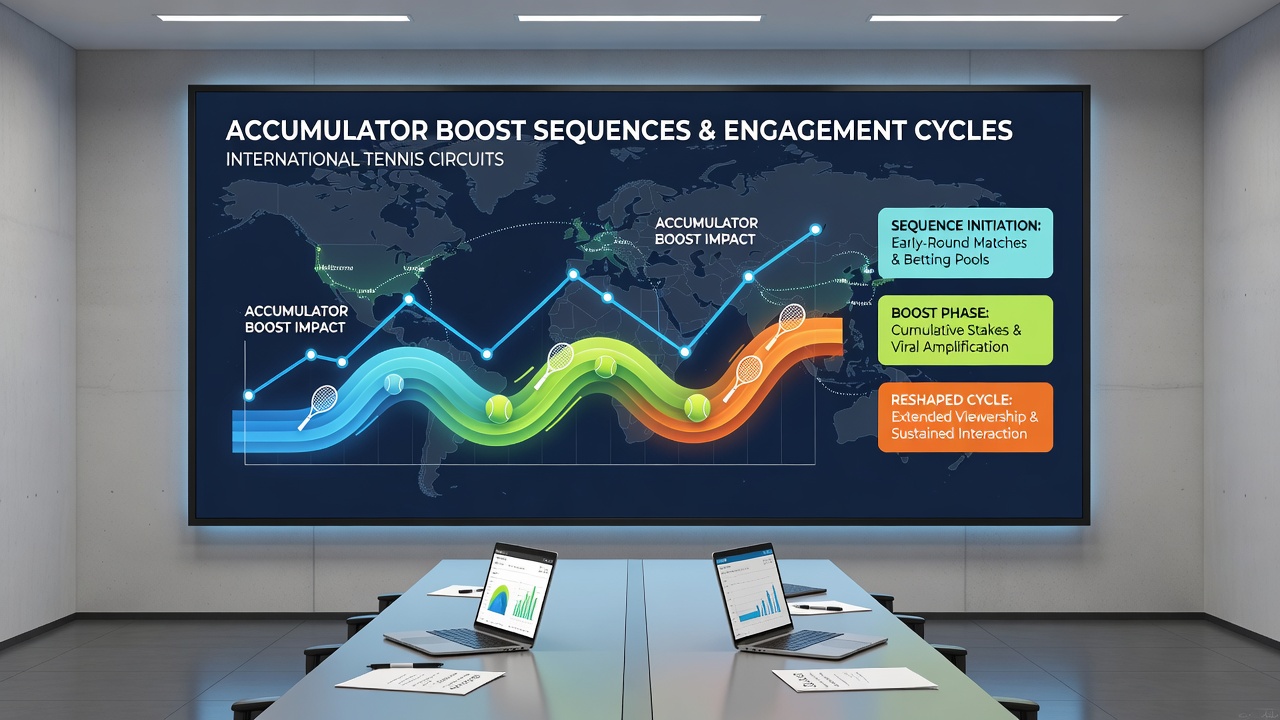
Engagement cycles in tennis betting traditionally peaked around Grand Slam weeks and then declined until the next big event, yet accumulator sequences have flattened these peaks into longer plateaus. Data collected through the first half of 2026 indicates sustained activity levels extending two to three weeks past the conclusion of major tournaments when boosts carry over to smaller ATP 250 and WTA 125 events.
One study of mobile wagering patterns found that users exposed to sequential boosts maintained account activity for an average of 14 additional days compared with those using standard promotions. This extension occurs because the boost ladder resets with each new tournament week, and bettors track qualification matches and lucky loser scenarios that feed into main draw accumulators.
Regional Variations in Implementation
European operators tend to tie boosts to clay-court swing events in spring while North American platforms emphasize hard-court sequences during the summer swing, and these regional preferences reflect differences in regulatory frameworks. Australian wagering sites, for instance, integrate boost sequences with local time-zone advantages during Asia-Pacific tournaments, which creates distinct engagement rhythms compared with those seen in Canadian markets where Ontario iGaming reports document parallel trends.
According to reports issued by the Australian Gambling Research Centre, accumulator activity during the lead-up to the 2026 French Open showed measurable increases in session duration when boosts applied across both men's and women's draws. Similar patterns appear in data released by the European Gaming and Betting Association, which tracks how sequential rewards influence cross-border participation during the North American hard-court season.
Interaction With Tournament Scheduling
Tennis circuits feature overlapping events that create natural opportunities for multi-leg accumulators, and boost sequences capitalize on this structure by rewarding selections that span different time zones and surfaces. Bettors who combine a morning match in Europe with an afternoon contest in the Americas receive progressive uplifts that keep them active through evening sessions in Asia-Pacific regions.
Platform logs from June 2026 show elevated accumulator completion rates during the transition period between the grass-court season and the North American swing, when several mid-tier events run concurrently. This timing allows sequences to bridge what were previously quiet periods in the calendar.
Conclusion
Accumulator boost sequences continue to integrate with the international tennis schedule by aligning reward triggers to the progression of draws and the overlap of global events. Data collected through mid-2026 demonstrates that these mechanisms produce measurable extensions in engagement duration across multiple circuits and regulatory environments. Observers tracking the sector note ongoing refinements in how operators calibrate boost percentages to match the rhythm of ATP and WTA calendars without altering core tournament structures.