Chronological Mapping of Threshold-Based Reward Unlocks Across Multi-State Wagering Networks
Written by Yara Baumann · May 30, 2026
Chronological Mapping of Threshold-Based Reward Unlocks Across Multi-State Wagering Networks
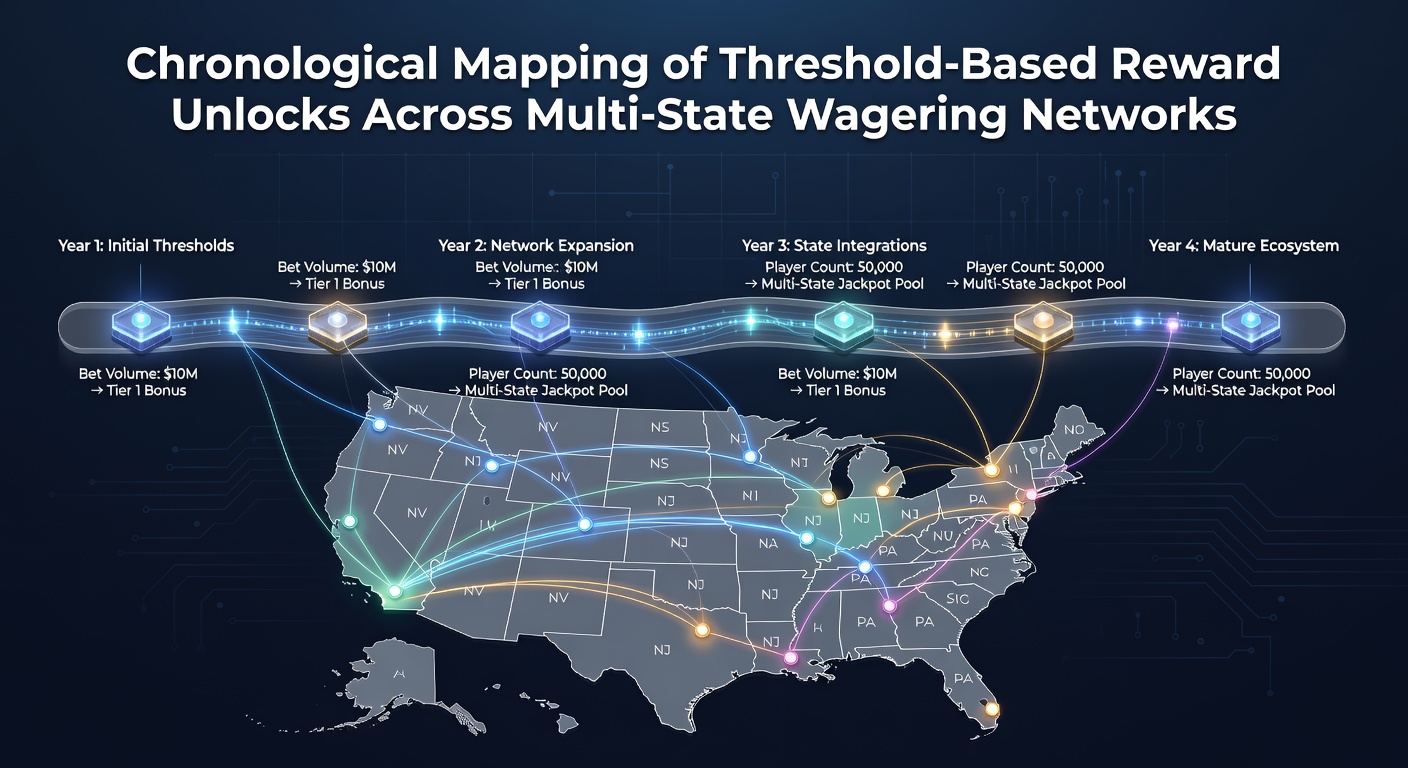
Operators began developing threshold-based reward systems shortly after the 2018 Supreme Court decision that opened the door for state-by-state sports wagering expansion, and these frameworks have since followed distinct chronological patterns as networks scaled across jurisdictions with varying regulatory requirements. Data from industry tracking services shows that early reward unlocks relied on simple deposit thresholds, yet those structures quickly evolved into layered models tied to cumulative wagering volume, account tenure, and cross-state activity synchronization.
Initial Rollouts and Early Threshold Structures 2018-2020
States such as New Jersey and Pennsylvania launched regulated markets first, prompting operators to establish baseline reward tiers that required bettors to reach specific deposit or handle amounts before unlocking bonuses or loyalty points. Records from the New Jersey Division of Gaming Enforcement indicate that initial thresholds often centered on $100 to $500 deposit markers, with unlocks granting free bets or deposit matches that reset on a monthly cycle. Multi-state networks quickly recognized that uniform thresholds created compliance friction, so they began mapping state-specific adjustments while maintaining a centralized backend system for tracking user progress across borders.
By late 2020 several operators had introduced time-based multipliers that adjusted threshold requirements according to the calendar quarter, a move that aligned reward pacing with seasonal sports calendars and helped stabilize engagement metrics across different regulatory environments.
Expansion Phase and Adaptive Threshold Mapping 2021-2023
As additional states legalized sports betting the number of multi-state networks grew rapidly, and operators shifted from static thresholds to dynamic models that recalibrated based on real-time data feeds from each jurisdiction. Research compiled by the University of Nevada Las Vegas International Gaming Institute documented how reward systems began incorporating state-specific hold percentages and tax structures into their unlock algorithms, which meant a single user account could face different volume requirements depending on the location where bets were placed. Chronological logs from major platforms reveal that loyalty point accrual rates were adjusted quarterly during this period, often lowering the threshold needed for the next tier when a new state entered the network.
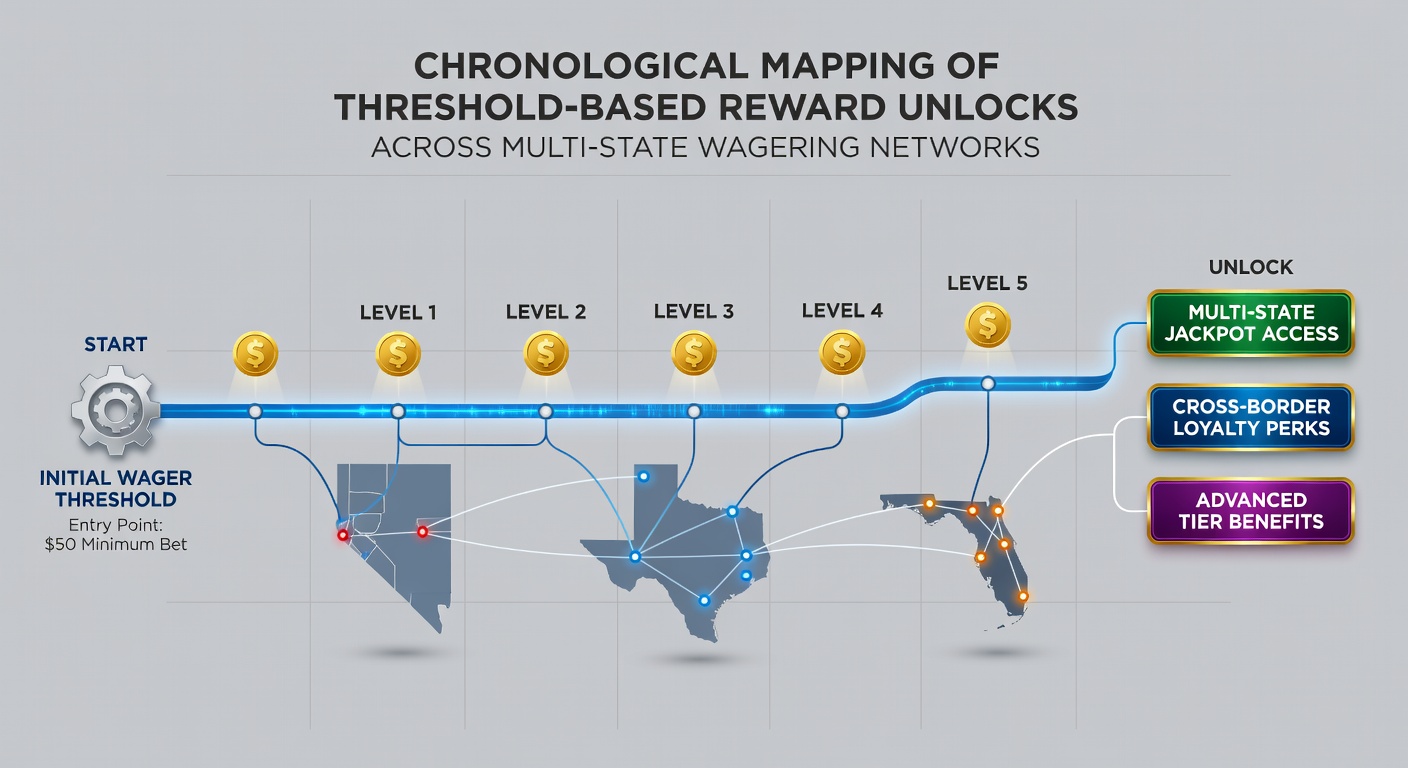
One notable development occurred in 2022 when several networks introduced cross-state synchronization features that allowed progress toward a reward unlock to accumulate regardless of which participating state hosted the wager. Figures from state regulatory filings show this change reduced average time-to-unlock by approximately 18 percent for users active in more than one market, while still preserving individual state reporting requirements for responsible gambling limits.
Refinement and Data-Driven Adjustments 2024-2026
By early 2024 operators had accumulated several years of user behavior data, enabling more precise chronological mapping of when thresholds should unlock to maximize retention without triggering regulatory scrutiny. Reports submitted to the Pennsylvania Gaming Control Board illustrate that reward structures began weighting recent activity more heavily than historical totals, a shift that prevented long-dormant accounts from carrying over old progress into new tiers. In May 2026 several networks further refined these models by linking threshold reductions to verified responsible gambling tool usage, creating an incentive layer that rewards players for setting deposit limits or self-exclusion periods.
Networks spanning more than ten states now maintain internal dashboards that visualize unlock timelines on a state-by-state basis, allowing compliance teams to verify that no single threshold violates local advertising or bonus rules. These visualizations incorporate live feeds from each jurisdiction's regulatory portal and automatically flag any proposed threshold change that would exceed permitted bonus values.
Current Patterns Observed in Multi-State Networks
Current implementations typically segment thresholds into four or five progressive tiers, with the first unlock triggered after modest deposit activity and later tiers requiring escalating handle amounts that reset annually. Observers note that operators increasingly publish anonymized aggregate data showing the distribution of users across tiers, which provides transparency while protecting individual account details. Australian regulatory filings from comparable digital wagering markets have served as reference points for some U.S. operators seeking to balance engagement incentives with harm-minimization goals.
Threshold adjustments now occur on rolling six-month cycles rather than fixed calendar dates, a practice that accommodates the staggered legislative calendars of different states and reduces the administrative burden of simultaneous updates across every market. This approach has allowed networks to maintain consistent user experiences while still satisfying each jurisdiction's distinct reporting obligations.
Conclusion
The chronological mapping of threshold-based reward unlocks has progressed from simple deposit-triggered bonuses to sophisticated, data-responsive systems that operate across multiple regulatory landscapes simultaneously. State filings, academic compilations, and operator disclosures together demonstrate that these frameworks continue to adapt in response to both technological capabilities and evolving compliance standards, producing a continuously updated timeline of how rewards become available to users in an expanding multi-state environment.