Matched Offer Thresholds Altering Volume Patterns Across Thoroughbred Wagering Platforms
Written by Yves Friedrich · Jun 13, 2026

Matched Offer Thresholds Altering Volume Patterns Across Thoroughbred Wagering Platforms
Threshold dynamics in matched offers continue to influence how bettors engage with thoroughbred wagering sites as operators adjust incentive structures to sustain participation levels through mid-2026. These mechanisms typically require users to meet specific deposit or wager minimums before unlocking bonus funds, and recent patterns indicate shifts in overall handle distribution across major racing circuits.
Data from multiple platforms shows that when thresholds align closely with average bet sizes in thoroughbred markets, daily volumes experience measurable upticks during peak racing days. Operators have refined these parameters since early 2025, responding to observed behaviors where bettors either exceed or fall short of required amounts, thereby affecting retention metrics in subsequent weeks.
Mechanics Behind Threshold Implementation
Matched offers function through defined entry points where a deposit of a certain size triggers proportional rewards, and thoroughbred sites apply these rules to both new and returning accounts. Researchers tracking activity across North American and Australian networks note that lower thresholds often correlate with increased frequency of smaller wagers, while higher barriers concentrate activity among segments already placing larger stakes on featured races.
Industry reports compiled through June 2026 highlight how these adjustments coincide with seasonal calendars, particularly around major events like the Belmont Stakes and international cups. Platforms monitor real-time data to recalibrate minimums, ensuring that volume contributions remain stable even as external factors such as field sizes and track conditions fluctuate.
Observed Shifts in Betting Volumes
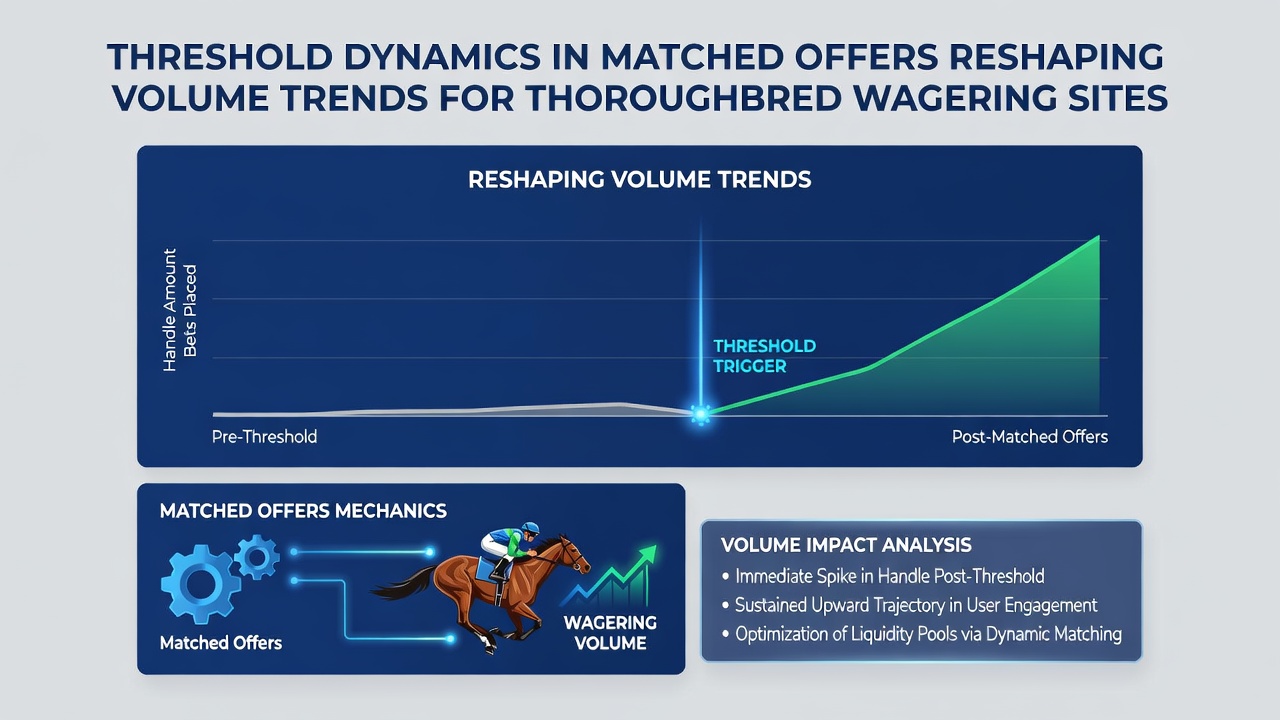
Volume trends on thoroughbred platforms reflect these threshold settings in distinct ways. When matched offers incorporate progressive tiers, bettors demonstrate a tendency to consolidate deposits into single transactions that meet the next reward level, which in turn elevates total handle during qualifying periods. Observers tracking multi-state operations report that this consolidation effect appears most pronounced among users focused on turf and dirt races with established morning-line odds.
Conversely, rigid single-threshold models have produced plateaus in activity once initial matches are claimed, prompting some sites to introduce rolling requirements tied to cumulative wagers over a racing meet. Figures from regulatory filings in jurisdictions including New Jersey and Victoria reveal modest gains in average daily turnover when such layered approaches replace flat structures, particularly during shoulder months outside peak festival periods.
Regional Variations and Platform Adaptations
Thoroughbred wagering sites operating across different regulatory environments adapt threshold parameters to local market conditions. Canadian operators, for instance, have integrated these incentives with provincial lottery frameworks, resulting in volume patterns that blend traditional race-day spikes with sustained mid-week activity driven by ongoing match eligibility. In contrast, European platforms emphasize compliance-linked thresholds that tie rewards to verified account activity spanning multiple race meetings.
One study released by the Racing Australia analytics division examined six months of transaction logs and found that dynamic threshold adjustments, updated weekly based on prior period volumes, produced steadier growth curves compared with static offers. These findings align with similar analyses conducted by academic teams at universities specializing in gambling behavior studies, where data sets from 2024 through spring 2026 illustrate comparable responses among thoroughbred-focused bettors.
Integration With Broader Market Data
Global racing industry aggregates, including those published by the International Federation of Horseracing Authorities, provide context for how matched offer thresholds intersect with overall handle figures. As of June 2026, combined online thoroughbred volumes in monitored markets show incremental increases attributable to refined incentive designs, though attribution remains distributed across promotional tools, live streaming enhancements, and fixture scheduling.
Platform operators continue to test variations that incorporate time-bound thresholds, requiring wagers within defined windows around graded stakes races. Such experiments have yielded insights into how bettors prioritize certain events when eligibility for matches depends on timely action, contributing to concentrated volume surges that taper once windows close.
Conclusion
Threshold dynamics embedded in matched offers represent an evolving component of thoroughbred wagering site strategies, with measurable effects on volume trends documented through regulatory submissions and operator analytics. Continued monitoring through the latter half of 2026 will clarify whether ongoing refinements sustain these patterns or prompt further recalibrations across international racing networks.