Seasonal Accumulator Tweaks Fueling Off-Peak Engagement Across Niche Volleyball Wagering Networks
Written by Yara Baumann · Jun 25, 2026

Seasonal Accumulator Tweaks Fueling Off-Peak Engagement Across Niche Volleyball Wagering Networks
Seasonal accumulator tweaks have gained traction in niche volleyball wagering networks where operators adjust parlay structures to sustain activity during quieter periods; these modifications often involve recalibrating leg requirements, payout multipliers, and eligibility windows tied to specific tournament calendars. Data from multiple platforms indicates that such changes correlate with steadier user volumes even when major events taper off, particularly around transitional months like June 2026 when European indoor leagues wind down while beach circuits ramp up in other regions.
Calendar-Driven Modifications to Accumulator Formats
Volleyball schedules create predictable lulls that operators address through targeted accumulator adjustments; for instance, networks handling Polish PlusLiga or Italian Serie A1 matches have introduced flexible leg counts during June when fewer fixtures occur, allowing bettors to combine selections from secondary competitions or exhibition events. Research from the European Gaming and Betting Association shows these adaptations maintain handle levels without relying solely on high-profile tournaments, as users encounter modified minimums that accommodate thinner schedules while preserving risk-reward balances.
Operators track participation metrics closely, noting that accumulator participation rises when tweaks align with regional off-seasons. In one documented case involving Australian beach volleyball circuits, platforms reduced the standard four-leg requirement to three during early June 2026 windows, which coincided with increased session lengths among users who previously logged in only during peak periods.
Engagement Patterns in Specialized Networks
Niche volleyball betting communities often operate through smaller platforms that focus exclusively on the sport rather than broad sportsbook offerings. These networks report that accumulator incentives timed to seasonal shifts help bridge gaps between major FIVB events and domestic leagues. Figures reveal consistent upticks in daily active accounts when operators layer bonus multipliers onto accumulators built around under-the-radar matches, such as South American club competitions that fill calendar voids.
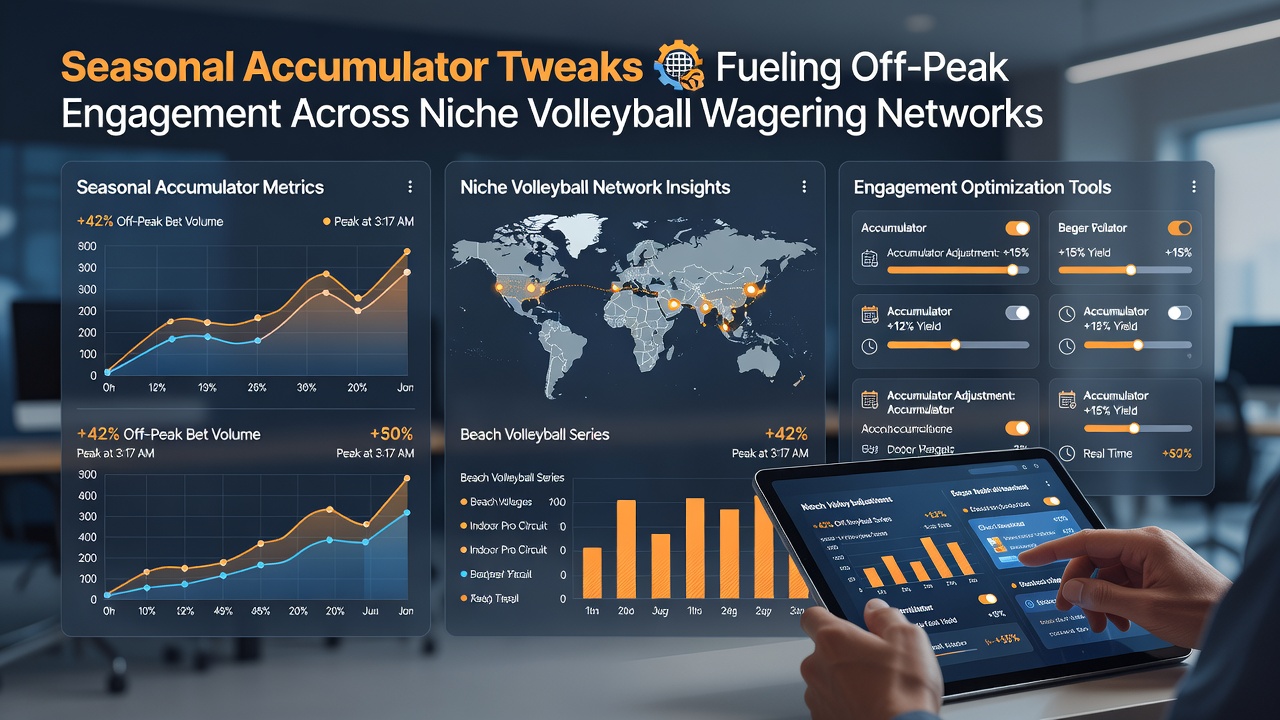
Users in these ecosystems frequently combine live in-play selections with pre-match accumulator legs, and seasonal tweaks encourage this behavior by adjusting cash-out thresholds or adding insurance features during lower-volume times. Observers note that engagement extends further into evening hours in June 2026, as platforms promote accumulators centered on Asian and Oceanian leagues that align with different time zones.
Technical Implementation Across Platforms
Backend systems powering these networks integrate seasonal data feeds to automate accumulator parameter changes. When fixture density drops below established thresholds, algorithms trigger modifications such as expanded team coverage or adjusted odds ceilings that keep accumulator construction viable. Industry reports from the Canadian Gaming Association highlight how these automated sequences reduce manual oversight while responding to real-time participation signals across multiple jurisdictions.
Verification sequences tied to accumulator claims also receive seasonal calibration, with some networks shortening approval windows during off-peak stretches to accelerate reward delivery and encourage repeat construction of new parlays. This approach maintains momentum without requiring larger promotional budgets.
Comparative Performance Metrics
Platform analytics indicate that volleyball-specific accumulator engagement during June 2026 off-peak intervals outperformed the same period in prior years when no seasonal tweaks applied. Networks that introduced graduated multipliers based on consecutive accumulator completions saw retention rates stabilize, particularly among users who favor multi-leg bets over single-match wagers. Such patterns emerge consistently in markets where volleyball occupies a secondary position behind dominant sports like soccer or basketball.
Cross-regional comparisons further illustrate the effect: platforms serving Scandinavian users during their summer hiatus experienced parallel gains after implementing accumulator adjustments calibrated to beach volleyball schedules. These shifts demonstrate how localized calendar awareness translates into sustained activity across otherwise fragmented wagering segments.
Conclusion
Seasonal accumulator tweaks continue to shape participation rhythms within niche volleyball wagering networks by aligning promotional mechanics with fluctuating fixture availability. Evidence from operational data underscores measurable effects on engagement continuity, especially during transitional periods such as June 2026. As networks refine these approaches through ongoing metric analysis, the focus remains on structural adjustments that sustain user interaction without altering core risk parameters.