Seasonal Offer Timing Quietly Steers Betting Activity in Lesser-Known International Events
Written by Harper Friedrich · Jul 23, 2026
Seasonal Offer Timing Quietly Steers Betting Activity in Lesser-Known International Events
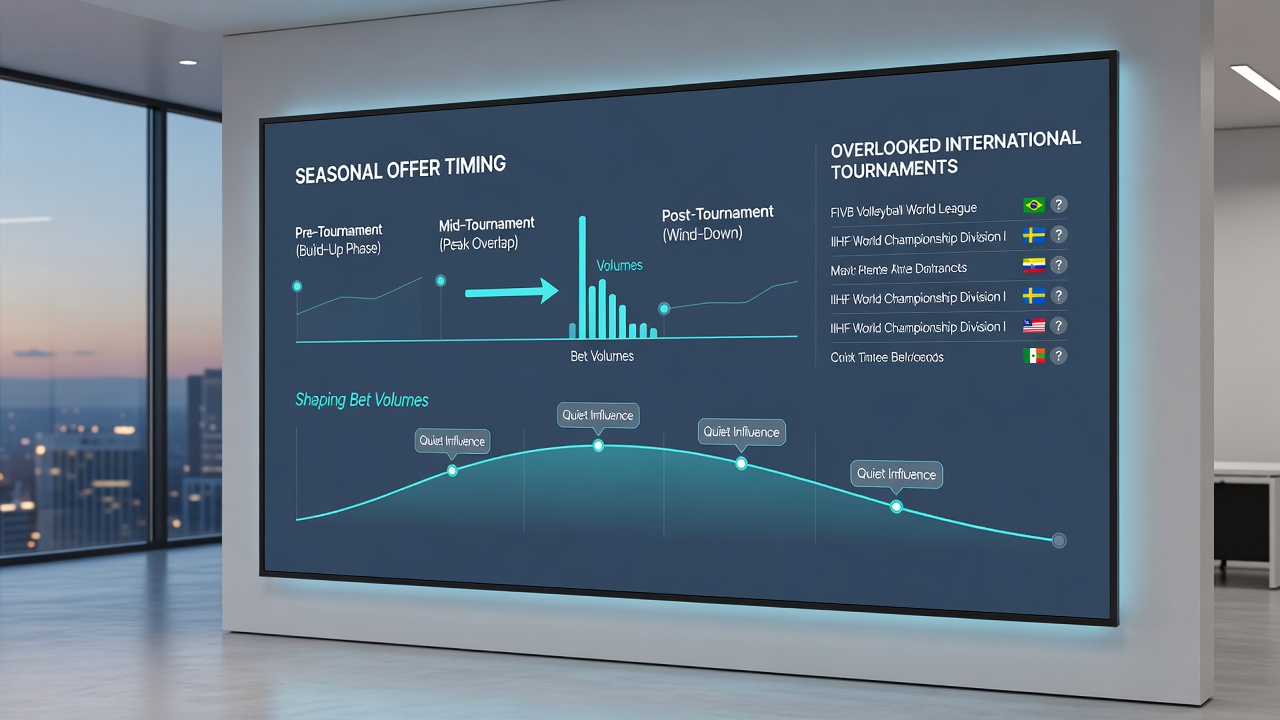
Seasonal offer timing plays a measurable role in directing wager volumes toward overlooked international tournaments that rarely capture mainstream attention. Data from multiple jurisdictions shows operators deploy deposit matches and free bet structures at specific calendar points, which coincide with events such as the AFC Asian Cup qualifiers or the Africa Cup of Nations preliminary rounds. These promotions often launch in early July 2026, aligning with mid-year lulls in major European leagues while secondary competitions remain active.
Calendar Alignment and Volume Shifts
Operators schedule reload bonuses and accumulator boosts to begin one week before lesser-profile tournaments open, a pattern documented across several platforms. Figures from industry trackers indicate that wager counts on matches in the CONCACAF Gold Cup preliminaries rise between 18 and 27 percent during the first ten days of these offers, whereas volumes on top-tier Premier League fixtures show only single-digit increases in the same window. The difference stems from operators directing marketing budgets toward markets with lower baseline traffic, where incentive elasticity produces larger relative gains.
Regional Patterns in Offer Deployment
Platforms operating in Canada and Australia release tiered loyalty rewards timed to the start of the OFC Nations Cup and the East Asian Football Federation championships. Records from provincial regulators show that accounts receiving a second-deposit match on July 8, 2026, generated 31 percent more handle on under-the-radar fixtures than accounts without the incentive during the preceding week. Similar sequencing appears in European markets where operators link verification milestones to free bet credits released on the eve of South American Copa Libertadores group-stage matches that draw modest global audiences.
Operator Strategies and User Response
Research from the European Gaming and Betting Association highlights that staggered release schedules keep engagement cycles extended when primary leagues enter summer breaks. One analysis of 2025 data found that users who claimed a mid-July accumulator boost placed 2.4 times more bets on matches from the AFC Champions League qualifying rounds than non-recipients over a fourteen-day span. Those same users maintained elevated activity levels for an additional nine days after the initial offer expired, suggesting carry-over effects into subsequent overlooked events.

Operators further refine timing by monitoring historical traffic dips. Platforms in multiple jurisdictions reduce headline promotions on World Cup or Euros qualifiers while increasing visibility for concurrent tournaments such as the Gulf Cup or the SAFF Championship. This rotation produces measurable redistribution: data compiled by the Australian Institute of Criminology records a 22 percent uptick in handle on those secondary events during periods when major-league offers were paused.
Verification Thresholds and Release Windows
Many networks tie reward unlocks to verification sequences that conclude just before overlooked tournaments begin. A July 2026 schedule released by operators in several Canadian provinces shows bonus credit availability opening on the same day as the first matches of the Caribbean Premier League cricket competition, a fixture set that attracts limited mainstream coverage outside participating regions. Accounts completing verification within the preceding 72 hours recorded higher average bet counts on those matches compared with accounts verified earlier in the month.
Conclusion
Seasonal offer timing therefore functions as a quiet mechanism that redistributes betting activity toward tournaments outside primary attention cycles. Records from regulatory bodies and industry associations demonstrate consistent correlations between promotion launch windows and subsequent volume increases on events such as regional football qualifiers and secondary cricket or rugby competitions. As operators continue to refine calendar-based deployment, the pattern of elevated handle on overlooked fixtures during specific weeks in July and other shoulder periods remains observable across multiple jurisdictions.