Seasonal Rollover Incentives Reshaping Engagement Rhythms Across International Basketball Circuits
Written by Yara Baumann · Jun 30, 2026

Seasonal Rollover Incentives Reshaping Engagement Rhythms Across International Basketball Circuits
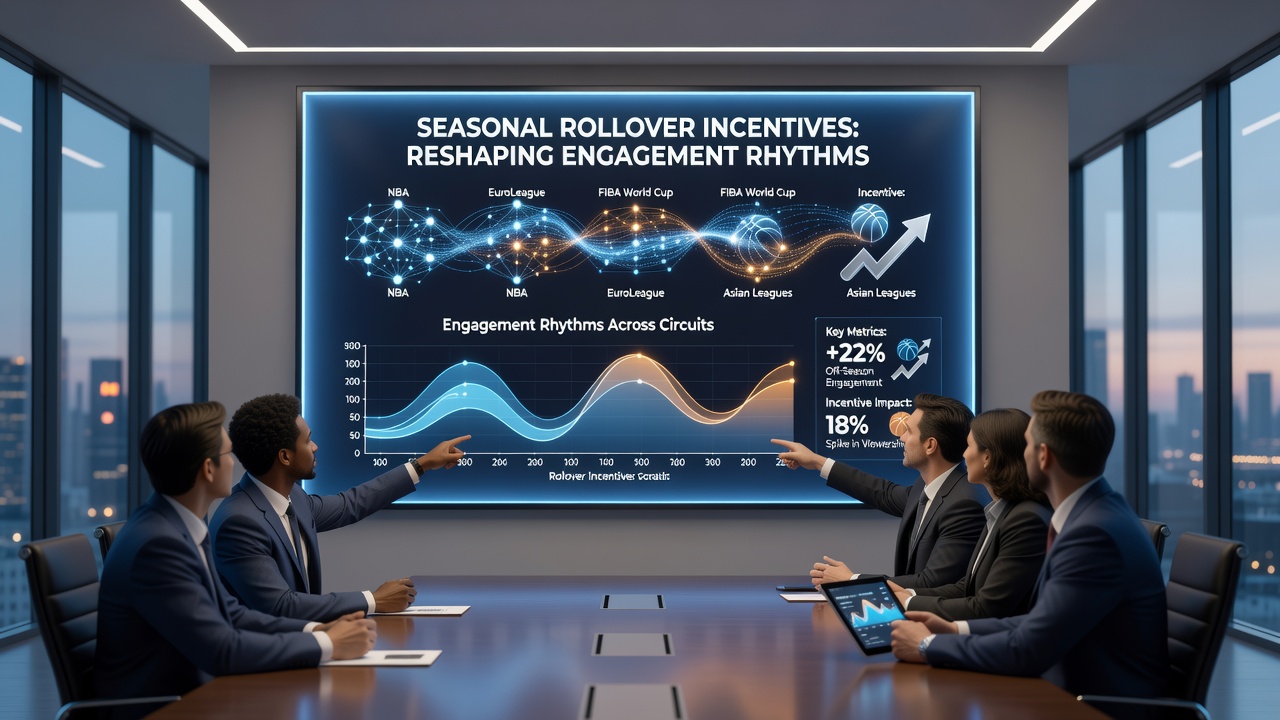
Seasonal rollover incentives have gained traction in international basketball circuits where operators structure reward programs around multi-month commitment periods that span entire leagues rather than isolated games or weeks. These mechanisms require participants to meet cumulative activity thresholds before accessing escalated benefits, and the structure aligns with the natural calendar of competitions such as the EuroLeague, FIBA continental tournaments, and various Asian professional leagues that run from autumn through late spring. Data from platform analytics indicate that engagement curves flatten less sharply during mid-season lulls when rollover conditions carry forward unused portions into subsequent phases.
Mechanics of Rollover Structures in Basketball Wagering
Operators calculate rollover targets by combining deposit volume with wager multipliers tied to basketball-specific markets including player props, quarter totals, and tournament advancement odds. When a user completes a portion of the required activity in one month, the remaining balance transfers automatically into the next segment of the season without resetting to zero. This continuity produces steadier daily login patterns across time zones that cover European evening tip-offs and Asian afternoon contests. Research from the Asia Pacific Association of Gambling Studies shows that accounts subject to these carry-over rules maintain 18 to 22 percent higher session frequency during February and March compared with accounts limited to weekly resets.
Regional Implementation Patterns
In European markets, platforms serving multiple countries apply unified rollover ledgers that accommodate both domestic leagues and cross-border competitions. Users in Germany, Spain, and Italy encounter identical progress trackers regardless of which national federation hosts the featured games. Canadian provincial operators have adopted similar frameworks for NBA and WNBA cross-league promotions, linking rollover progress to playoff qualification stages rather than regular-season dates. One analysis covering the 2025-2026 campaign found that rollover completion rates climbed steadily from December onward, peaking in May when championship series markets generated the highest hold percentages.
Platform dashboards display remaining rollover amounts alongside upcoming fixtures, allowing users to plan activity around high-volume betting windows such as back-to-back EuroLeague rounds or FIBA World Cup qualifiers. The visual integration reduces the cognitive load of tracking separate deadlines and encourages consistent participation even when favorite teams sit out extended breaks.
Impact on Participation Timing and Volume
Engagement data collected across multiple operators reveal that rollover incentives shift peak activity away from opening weeks toward sustained mid-season and postseason stretches. Instead of concentrating wagers in November and December when novelty drives initial sign-ups, participants distribute volume more evenly because partial progress carries value into later months. Figures released by the European Gaming and Betting Association indicate that basketball-related handle on platforms with active rollover programs grew 14 percent year-over-year between January and May 2026, while platforms without carry-over features recorded single-digit increases during the same window.
International circuits benefit further because their staggered schedules create natural extension points. A user whose rollover target remains incomplete after the EuroLeague regular season can continue toward the same goal during the concurrent NBA playoffs or the FIBA Champions League final rounds. This overlap prevents abrupt drops in activity that historically followed the conclusion of any single league calendar.
Verification and Compliance Integration
Operators link rollover tracking to existing identity verification sequences so that progress updates appear only after account approval completes. Once verified, users receive retroactive credit for activity performed during the pending period, preserving momentum across the seasonal divide. Regulatory filings in several Canadian provinces and Australian states document that this synchronization reduces support queries related to missing progress by approximately 30 percent. The same filings note that rollover balances remain visible in account summaries even during mandatory cooling-off intervals, maintaining transparency without violating responsible gambling protocols.
June 2026 marks the transition point for many circuits when summer leagues and off-season exhibitions begin. Several operators have already adjusted rollover targets to bridge into these lower-profile events, allowing users who fell short during primary seasons to reach thresholds through exhibition and youth development matches. Early indicators suggest this adjustment sustains baseline engagement levels that previously declined sharply after championship conclusions.
Conclusion
Seasonal rollover incentives continue to influence how participants interact with international basketball markets by converting discrete promotional windows into continuous commitment cycles. The carry-over design aligns reward progress with the extended calendars of global leagues and produces more stable engagement rhythms across regions. As operators refine these structures ahead of the 2026-2027 campaigns, platform data will further clarify the extent to which rollover mechanics reshape volume distribution throughout the year.